
Bathrooms & ensuites
Bathroom renovations in Adelaide, planned and built properly
Bright Building & Renovations carries out bathroom renovations across Adelaide, the Adelaide Hills and the Fleurieu Peninsula through to Victor Harbor, from compact ensuites and powder rooms to busy family bathrooms. A bathroom packs drainage, plumbing, wiring and waterproofing into a small room, and the order it's built in decides how well it lasts.
- Builder's Licence BLD 45463
- 45 years of building experience
- Insured & warranty-backed
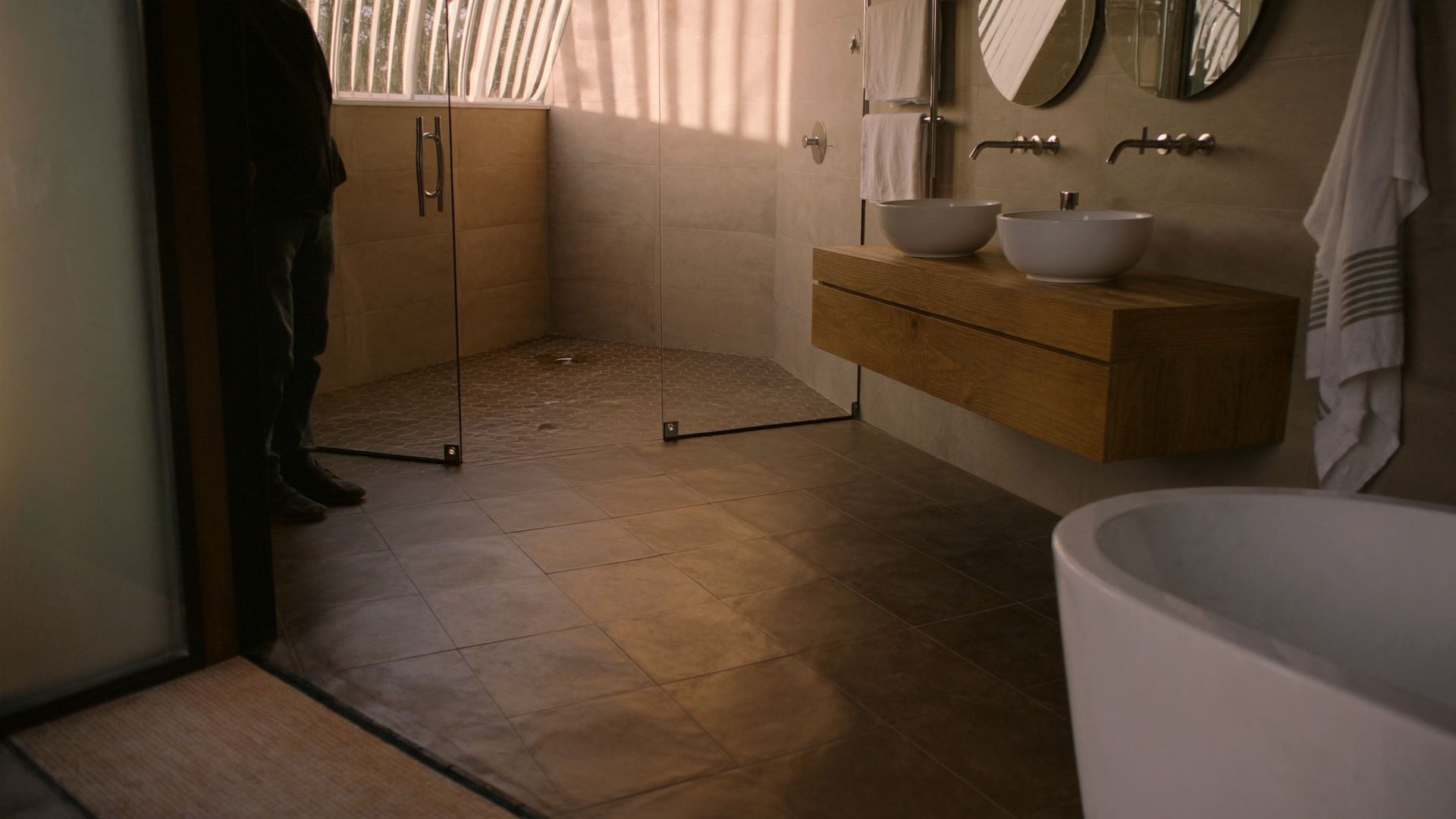 Design concept
We're a licensed builder (BLD 45463) with 45 years of building experience. You talk directly with a director, and we coordinate the licensed trades so the work hidden behind the tiles is done in the right order.
What's included
Every scope is confirmed in your written quote. Depending on your project, it can include:
- Site visit, measure-up and written quote
- Protection of floors and access paths
- Strip-out once suspect materials have been checked
- Agreed repairs to framing, floors and linings found at strip-out
- Licensed plumbing and electrical, coordinated from rough-in to fit-off
- Framing for niches, in-wall cisterns and wall-hung vanities
- Wet-area linings, screeds and waterproofing to NCC requirements
- Floor and wall tiling
- Exhaust fan, lighting and heated towel rail installation
- Fit-off of your vanity, toilet, tapware, shower screen and accessories
- Painting, clean-up and a handover walk-through
What does a bathroom renovation involve?
Quick answer
A bathroom renovation usually means stripping the room back to its frame or masonry, repairing what's behind the old tiles, roughing in new plumbing and electrical, then waterproofing, tiling and fitting off. Whether it's a main bathroom, ensuite or powder room, the order of work matters as much as the finishes.
Main and family bathrooms
The main bathroom has to balance a bath for children or guests, a shower that suits adults and storage for several people. It's often the only bathroom too, which shapes how the work is staged.
Ensuites
Ensuites are often squeezed into a bedroom corner or carved out of a walk-in robe. Successful ensuite renovations in Adelaide hinge on a practical drainage route, a door that clears the fixtures and a fan strong enough for a small room that steams up fast.
Powder rooms
Usually just a toilet and basin, a powder room still needs careful plumbing and finishing. Because guests use it, it's a good place for a bolder tile or light fitting.
Which bathroom layout suits your home?
Quick answer
The right layout starts with where the drains and walls already are. Walk-in showers, recessed niches, wall-hung vanities and in-wall cisterns can all make a bathroom feel larger, but moving the toilet or shower waste, especially in a concrete slab, adds cost. We'll talk through what your room can realistically take.
Walk-in showers
A walk-in shower renovation usually swaps a shower over the bath, or a cramped cubicle, for an open shower behind one fixed glass panel. The floor must be graded to drain properly, and a linear grate can help. A niche framed into a stud wall keeps bottles off the floor.
Bath or no bath?
If it's your only bathroom and you have young children, or you may sell to a family later, a bath usually earns its space. In an ensuite or second bathroom, many people trade it for a bigger shower.
Vanities and wall-hung fixtures
A double vanity needs genuine width, so it suits main bathrooms and larger ensuites. Wall-hung vanities and toilets with in-wall cisterns show more floor and are easier to clean, but they need solid framing, and the cistern must stay accessible for servicing.
Small and narrow bathrooms
Adelaide villas often have the bathroom in a rear lean-to, and many 1960s–80s homes pair a small bathroom with a separate toilet. A small bathroom renovation in either can gain a lot from:
- A wall-hung vanity and in-wall cistern
- A cavity sliding door where a swinging door clashes with fixtures
- One fixed glass panel instead of a hinged shower door
- Larger tiles, with the floor tile carried through the shower
- Combining the separate toilet with the bathroom, if the wall between them can come out
Why does waterproofing matter so much in a bathroom?
Quick answer
Waterproofing is hidden under the tiles, but if it fails, water can damage framing, floors and nearby rooms before you notice. It must comply with the National Construction Code (NCC) as it applies in South Australia, and Australian Standard AS 3740, Waterproofing of domestic wet areas, is the standard most commonly used to meet those requirements.
The shower floor is graded so water runs to the waste, the membrane goes on where the rules require, and every tap and waste penetration is sealed. The membrane has to cure and be checked before tiling. In old bathrooms, common failure points include the shower hob, the waste and the edge of the bath.
Who manages the plumber, electrician and tiler?
Quick answer
We do. As your bathroom renovation builder in Adelaide, Bright is your one point of contact, coordinating the licensed plumber and electrician along with the waterproofer and tiler. Plumbing, gas and electrical work must be done by appropriately licensed trades, and each stage is planned so it's ready for the next.
Instead of chasing four or five trades who are each waiting on the one before, you deal with a director, Has or Darko.
How do you stop mould and condensation in a new bathroom?
Quick answer
Good ventilation goes a long way to keeping a new bathroom looking new. An exhaust fan ducted to outside, rather than venting into the roof space, is commonly needed to clear steam and moisture. Pairing it with a run-on timer, a window you can open and a heated towel rail helps surfaces dry out between showers.
Adelaide's cool, damp winters are when bathrooms struggle: steam meets cold ceilings and mould follows. Many older bathrooms have no fan, or one that vents into the ceiling space, so the duct route and outlet are worked out before the new ceiling is lined.
How do you choose tiles, tapware and fittings?
Quick answer
Choose finishes for daily use, not just looks. Floor tiles need suitable slip resistance, tapware must match the valves set in the wall, and lighting, heated towel rails and storage need power or framing planned before the walls are lined. Locking selections in early helps avoid delays and rework.
Tiles
Porcelain tiles are dense and hard-wearing. Larger tiles mean fewer grout lines but are harder to grade on a shower floor. Ask about slip resistance, consider a stain-resistant grout in the shower and keep a few spare tiles for future repairs.
Tapware and fixtures
The valves for wall-mounted mixers are built into the wall at rough-in, so choose the model early, and ask how each finish shows water spots before committing.
Lighting and heated towel rails
Combine ceiling lights with good light at the mirror, and perhaps a soft strip under a wall-hung vanity for night-time. A hard-wired heated towel rail on a timer takes the chill off in winter. Electrical fittings in a bathroom must suit their position and be installed by a licensed electrician.
Storage
List what needs a home before choosing a vanity. Drawers are usually more practical than doors under a basin, and a recessed shaving cabinet keeps the benchtop clear.
How can you make a bathroom easier to use in the future?
Quick answer
Plan for later while the walls are open. A step-free shower and timber blocking for future grab rails are far easier to build in now than to retrofit. Add a hand shower on a rail and lever mixers, and the room becomes easier for older family members, visitors and anyone recovering from an injury.
A level shower entry is usually simpler on a timber floor than on a concrete slab, because the shower floor can sometimes be set down between the joists. We'll check what your house allows before you commit.
- Slip-resistant floor tiles carried through the shower
- A wider doorway or cavity sliding door where space allows
- A comfort-height toilet and bright, low-glare lighting
What should you know before renovating a bathroom in an older Adelaide home?
Quick answer
Older homes often hide surprises behind bathroom tiles. Homes built or renovated before 1990 are likely to contain asbestos, and bathrooms in stone and brick homes can be affected by salt damp. Both should be looked at before strip-out, so they can be allowed for in the plan, price and sequence.
Asbestos
If your home was built or renovated before 1990, it is likely to contain asbestos. In bathrooms, it may be found in older wet-area linings, fibro sheeting, and vinyl floor tiles and their backing. Asbestos has been banned in Australia since 31 December 2003, and suspect materials should be checked before any demolition. We don't test for or remove asbestos, but we plan the strip-out around those checks and any licensed removal that's required.
Salt damp in masonry walls
Salt damp, rising damp that carries salts into masonry, is common in older Adelaide stone and brick homes, especially where the original damp-proof course has failed or been bridged by paths, garden beds or render. In a bathroom it can show up as crumbling render or loose tiles low on the wall. The right treatment depends on the cause, and work on heritage-listed places may need approval.
Timber floors and old pipes
In villas and bungalows with timber floors, long-term shower leaks can rot the joists, and older homes may also have ageing galvanised pipes or clay drains. If strip-out uncovers these, we'll explain the options before any extra work goes ahead.
Can you stay at home during a bathroom renovation if it's your only bathroom?
Quick answer
Yes, many people do, but it takes planning. Before work starts, we'll talk through how you'll shower and use a toilet while the bathroom is out of action, and which stages are the most disruptive, so you can arrange alternatives that suit your household rather than improvising mid-job.
- Check whether a second toilet, an outdoor toilet or the laundry trough can stay in use
- Line up showers with family, friends, a gym or your workplace for the most disruptive stages
- Consider hiring a portable toilet or shower unit for the site
- Agree the access route trades will use through the house, and clear it before work starts
- Move fragile items out of nearby rooms before strip-out
Do you need approval for a bathroom renovation in South Australia?
Quick answer
Internal, non-structural bathroom renovations often don't need development approval, but structural changes can. Whether your project needs development approval (planning consent, building consent or both) depends on the work and the zone and overlays that apply to your property. You can check them in the SA Property and Planning Atlas (SAPPA) or on PlanSA.
Structural changes include removing or altering a load-bearing wall, which can come up when combining a separate toilet with the bathroom. In a Historic Area or Character Area Overlay under the Planning and Design Code, demolition and changes visible from the street may need planning consent.
We don't prepare drawings, provide engineering or lodge applications, but we'll flag early if your plans look like they need approval or engineering input.
How your bathroom project runs
Talk and site visit
A director visits to measure up, check the floor, walls, drainage and ventilation, and hear how your household uses the room.
Scope and written quote
We set out the scope in writing, including anything that can't be confirmed until the old bathroom is stripped.
Selections and set-out
You confirm tiles, tapware and fixtures before work starts, so valves, niches and cistern frames are set out for exactly what's arriving.
Strip-out and rough-in
Once suspect materials are checked, we protect the house, strip the room and make any agreed repairs. Licensed plumbers and electricians then rough in.
Waterproofing and tiling
Wet-area linings and screeds go in, the membrane is applied, cured and checked, then floor and wall tiles are laid and grouted.
Fit-off and handover
Fixtures are installed and tested, and we walk through the finished bathroom with you before handover.
What's specific to renovating a bathroom in South Australia?
These issues can affect bathroom renovations across Adelaide, the Hills and the Fleurieu. Knowing about them early makes planning and pricing more accurate.
Check your builder's licence
You can check any South Australian builder's licence, including ours, on the Consumer and Business Services (CBS) 'Find a licence holder' register. Bright's licence number is BLD 45463.
Engineered stone vanity tops
Since 1 July 2024, work health and safety laws in South Australia and across Australia have banned the manufacture, supply, processing and installation of engineered stone benchtops, panels and slabs (artificial stone containing 1% or more crystalline silica). An existing engineered stone vanity top can stay where it is, but if it needs to be removed or modified, the business doing that work must notify SafeWork SA beforehand and control silica dust.
Character and heritage homes
In a Historic Area or Character Area Overlay under the Planning and Design Code, demolition and changes visible from the street may need planning consent, and heritage-listed places may need further approval.
Hills and Fleurieu services
Some Adelaide Hills and Fleurieu homes rely on rainwater tanks, pumps or an onsite wastewater system. Tell us early, because water pressure and drainage connections can affect tapware choices and plumbing layout.
What affects the cost of a bathroom renovation in Adelaide?
Quick answer
The biggest cost drivers are the room's size, whether fixtures move, what's behind the old tiles and the finishes you choose. Two bathrooms of the same size can cost very differently once drainage, repairs, asbestos checks and access are factored in, which is why we quote after seeing the room.
Talk to us about your bathroom and we'll explain what's driving the price.
- Keeping the existing layout, or moving the toilet, shower or vanity
- Cutting and reinstating a concrete slab to relocate drainage
- Rot, leak damage, uneven walls or salt damp found at strip-out
- Asbestos checks and any licensed removal
- Tiling extent, tile format and laying pattern
- Tapware range, in-wall cisterns, freestanding baths and frameless glass
- Off-the-shelf or custom-made vanities and storage
- Heated towel rails, underfloor heating and any switchboard upgrade
- The length and route of the exhaust duct
- Access: upstairs bathrooms, apartments, narrow paths and parking
- Approvals and engineering for structural changes
Every project is quoted on its scope. Tell us what you're planning and we'll talk you through it.
Start your bathroom quoteDesign ideas
Representative design concepts to help you picture layouts and finishes. They aren't photos of completed Bright projects.
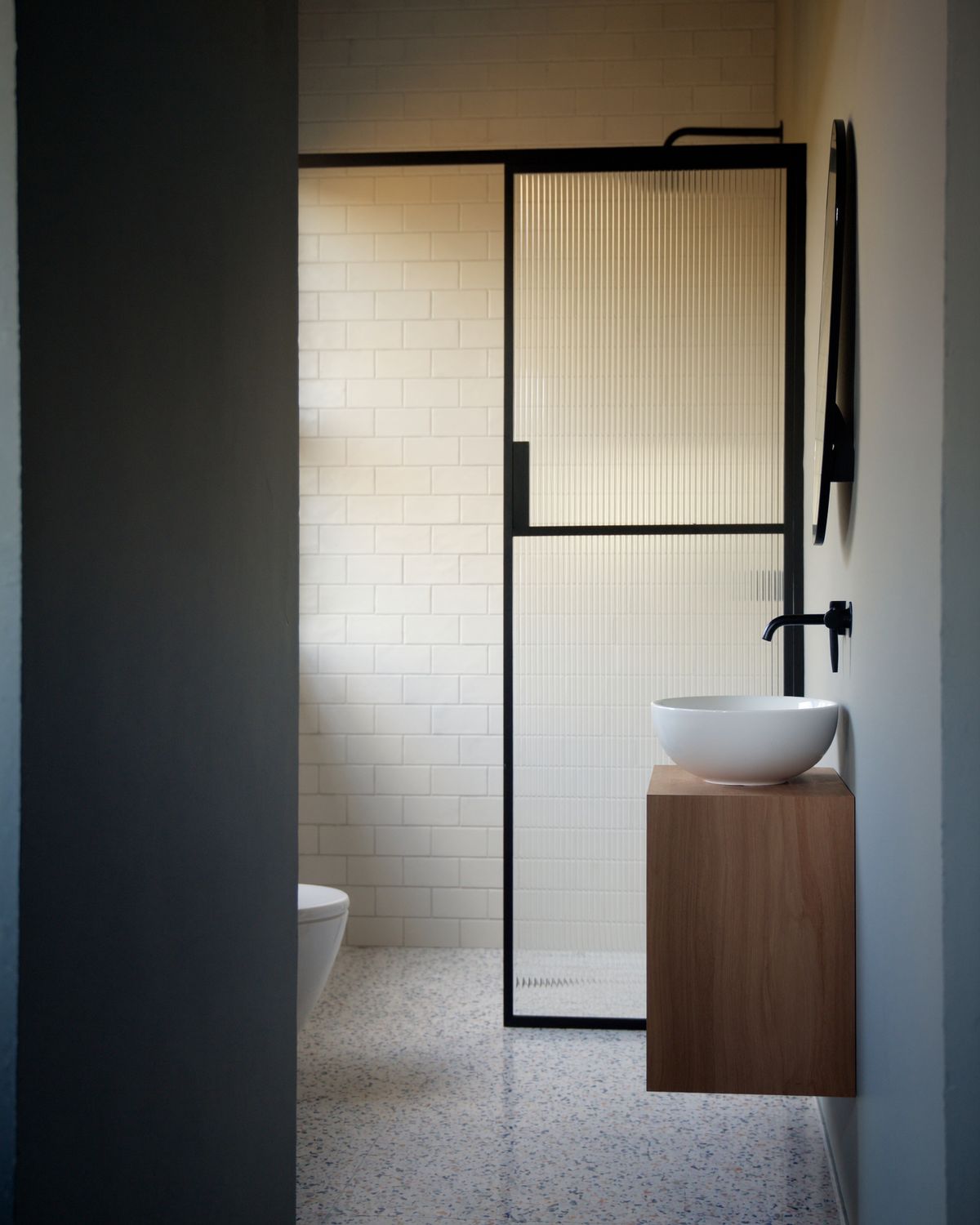 Design concept
Fig. 01Ensuites 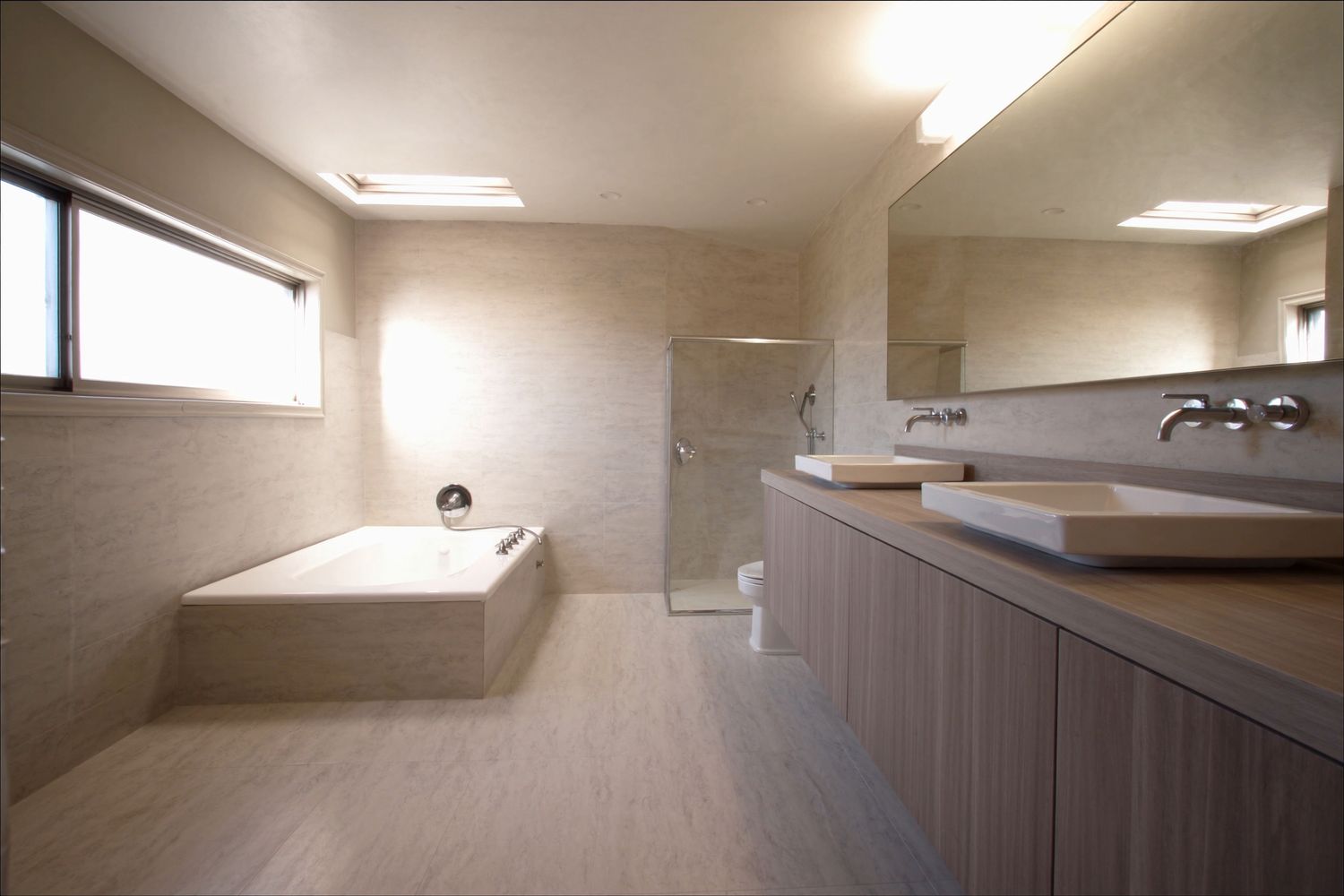 Design concept
Fig. 02Family bathrooms
Frequently asked questions
How long does a bathroom renovation take in Adelaide?
It depends on the room's size, whether fixtures move, what's behind the old tiles, any asbestos checks or removal, and when your selections are available. Some stages can't be rushed: the waterproofing membrane must cure, and frameless shower screens are usually measured after tiling.
We'll give you a realistic program once the scope and selections are confirmed.
Do I need council approval to renovate a bathroom in SA?
Not always. Internal, non-structural bathroom renovations often don't need development approval, but structural changes, such as altering a load-bearing wall, can. It also depends on your property's zone and overlays.
Check your property in the SA Property and Planning Atlas (SAPPA) or on PlanSA before you start, and we'll flag anything in your plans that looks like it may need approval.
What waterproofing standard applies to bathrooms in South Australia?
Waterproofing in bathrooms, laundries and other wet areas must comply with the National Construction Code (NCC) as it applies in South Australia. Australian Standard AS 3740, Waterproofing of domestic wet areas, is the standard most commonly used to meet those requirements.
Plumbing, gas and electrical work must be done by appropriately licensed trades.
Can you renovate our ensuite and main bathroom at the same time?
Yes. Renovating both together means fewer separate trade visits and finishes that match. The trade-off is that you may be without a working shower for part of the job.
A common approach is to stage the work so one bathroom stays usable while the other is built. We'll talk through how each option affects the program and the cost.
Can I supply my own tiles, tapware or vanity?
Talk to us about it. It's sometimes possible, but tapware must match the valves set in the wall, tile quantities need to allow for cuts and spares, and items must arrive before the trade that installs them. We'd also need to agree who's responsible if a supplied item is faulty or damaged.
My bathroom dates from the 1970s. Could it contain asbestos?
It could. If your home was built or renovated before 1990, it is likely to contain asbestos. In a bathroom, that can include older wet-area linings, fibro sheeting, or vinyl floor tiles and their backing.
Suspect materials should be checked before any demolition. Where the law requires a licensed removalist (any friable asbestos, or more than 10 m² of non-friable asbestos), removal must be done by a SafeWork SA–licensed asbestos removalist. Bright doesn't test for or remove asbestos.
Can you renovate a bathroom in a character home or villa?
Yes. Bathrooms in villas and cottages are often in a rear lean-to, with uneven timber floors, old plumbing and masonry walls that may have salt damp, so we plan for those conditions from the first visit.
In a Historic Area or Character Area Overlay under the Planning and Design Code, changes visible from the street may need planning consent.
Do you design the bathroom, or do I need a designer?
We don't offer design or drafting services. For a straightforward renovation, many homeowners choose a layout and selections with help from bathroom showrooms, and we'll talk through what's practical to build and how it affects cost.
For major layout or structural changes, you may want a designer, plus an engineer where needed. We're happy to quote from their plans.
Keep exploring
Related services
Planning more than one piece of work? These services often go hand in hand with this one.
Laundry renovations
Full laundry renovations and compact cupboard laundries, with waterproofing, cabinetry, tiling and plumbing by licensed trades coordinated as one job.
Kitchen renovations
New kitchens, islands and butler's pantries, plus the work around them: walls, lighting, flooring, and plumbing and electrical by licensed trades.
Home renovations
Reworked layouts, opened-up living areas and updated character homes, planned around how your household lives now.
Where we work
Areas we cover
We work across metropolitan Adelaide, the Adelaide Hills and the Fleurieu Peninsula through to Victor Harbor. Each area page explains the housing, councils and site conditions to plan for.
- Eastern Suburbs
- Unley, Mitcham & Inner South
- Western & Beachside Suburbs
- Northern Suburbs
- Southern Suburbs
- Adelaide Hills
- Victor Harbor & Fleurieu
Before you start
Helpful guides
Guide · 9 min read
Planning a bathroom renovation in Adelaide: a step-by-step guide
Layout, waterproofing, tiles, ventilation and the decisions that shape cost: what to think through before a bathroom renovation starts.
Guide · 8 min read
Approvals, licences and insurance for renovations in South Australia
When development approval may be needed, how to check a builder's licence, and how building indemnity insurance and statutory warranties work in SA.
Your project starts here
Talk through your bathroom with a director
Tell us which bathroom you're renovating and what isn't working. A director will arrange a site visit and prepare a written quote that spells out the scope. We work across metropolitan Adelaide, the Adelaide Hills and the Fleurieu Peninsula through to Victor Harbor.